Foundation Inspection in Burleson, TX
Foundation inspection in Burleson, TX. Elevation surveys and symptom review tell you whether your home is moving and what to do next.
What a foundation inspection tells you
A foundation inspection answers the question every homeowner with a cracked wall or a sticking door is asking: is this serious, and do I need to do anything about it? On Burleson's expansive clay, some movement is normal seasonal behavior, while other movement is real settlement that will keep getting worse. An inspection separates the two.
People usually call after they notice something specific: a stair-step crack in the brick, a diagonal crack over a doorway, floors that feel sloped or bouncy, a gap opening above a cabinet, or a door that suddenly will not latch. Any one of these can be minor or a symptom of a bigger problem, and only measurement tells you which.
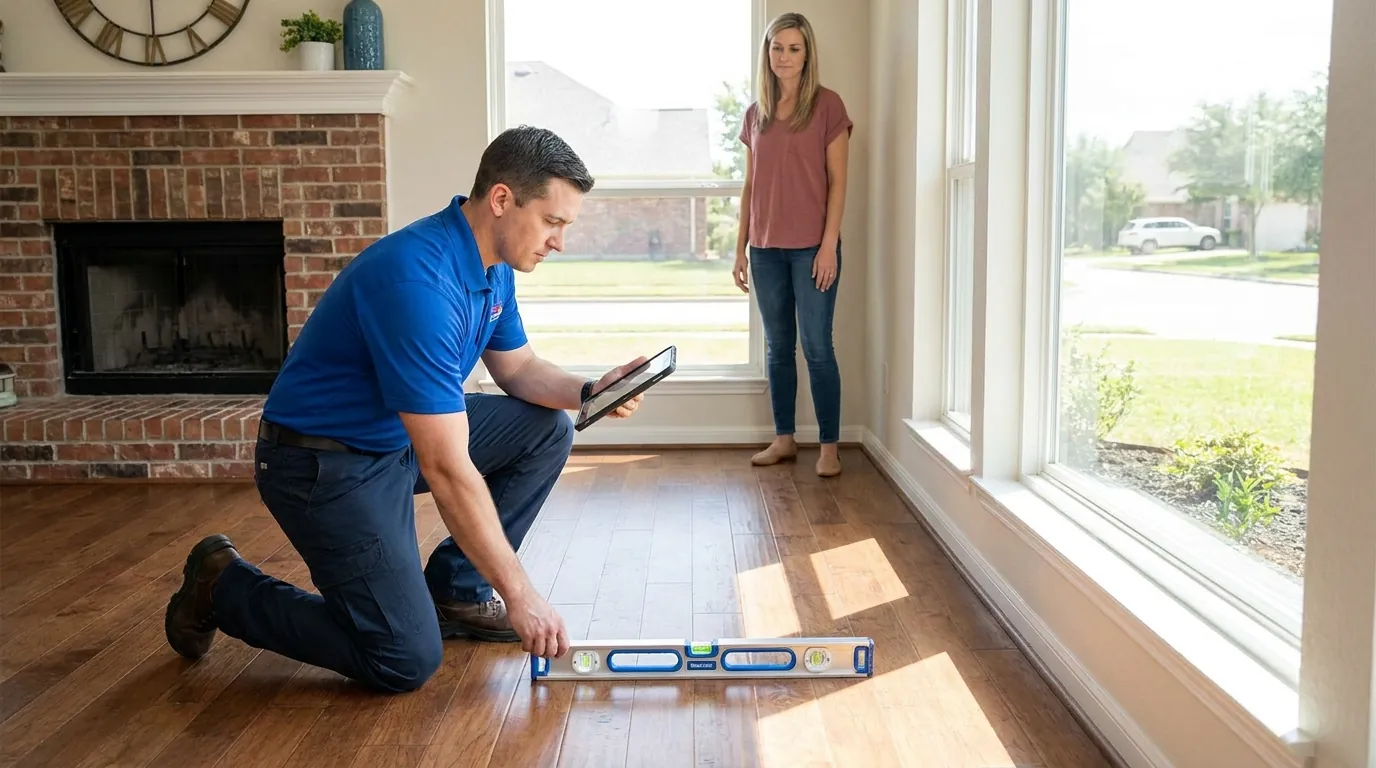
The centerpiece of the inspection is a floor-elevation survey, which measures the height of the floor at points across the home to reveal how much it has moved and in what direction. Combined with a review of the interior and exterior symptoms, that data shows whether you are looking at settlement, heave, or a foundation that is simply riding the seasons within a normal range.
What the inspection covers
The visit is methodical, so you leave with facts rather than guesses.
-
Symptom walk-through
We review the cracks, doors, floors, and gaps you have noticed, inside and out, and note the pattern they form.
-
Floor-elevation survey
Readings are taken across the floor to map the high and low points, showing exactly how much the foundation has moved.
-
Exterior and drainage check
We look at grading, gutters, downspouts, and soil conditions around the home, since water is usually part of the story.
-
Foundation-type assessment
Slab and pier-and-beam homes are evaluated differently, so we confirm what you have and what that means for any repair.
-
Clear findings and options
You get a plain explanation of what is happening and your realistic choices, whether that is monitoring, drainage work, or structural repair.
Turning the inspection into a decision
The value of an inspection is that it lets you decide with real information instead of worry. If the readings show your home is within a normal range, you may only need to watch it and manage watering and drainage. If they show genuine settlement, you will know which areas are affected and how extensive a repair would be.
From the findings, the path forward is usually clear. A slab home with settled corners points toward slab foundation repair, while a pier-and-beam home with sagging spans points toward pier and beam leveling or added support. In many cases the first recommendation is simply drainage correction, because fixing the water slows movement before it becomes a structural bill.
Whatever the result, an inspection is the sensible starting point. It costs far less than repairing damage that was allowed to progress, and it gives you a baseline you can compare against if you decide to keep an eye on things over the coming seasons.
Frequently asked questions
How do I know when to get an inspection?
If you see new or growing cracks, doors and windows that suddenly stick, sloping or bouncing floors, or gaps opening at ceilings and cabinets, an inspection is worthwhile. Catching movement early usually means simpler, less costly work.
What is a floor-elevation survey?
It is a set of height measurements taken at points across your floor to map the high and low areas. The differences reveal how much the foundation has moved and where, which is the basis for any repair plan.
Does every inspection lead to repair?
No. Many homes are found to be moving within a normal seasonal range and only need monitoring and better moisture management. The inspection tells you honestly whether repair is warranted.
Can an inspection help me before buying a home?
Yes. An elevation survey and symptom review give you an objective picture of a home's foundation condition, which is useful information when you are deciding on a purchase in the Burleson area.
Talk to someone about your job
Call to describe the problem and get a quote for work in Burleson, TX.